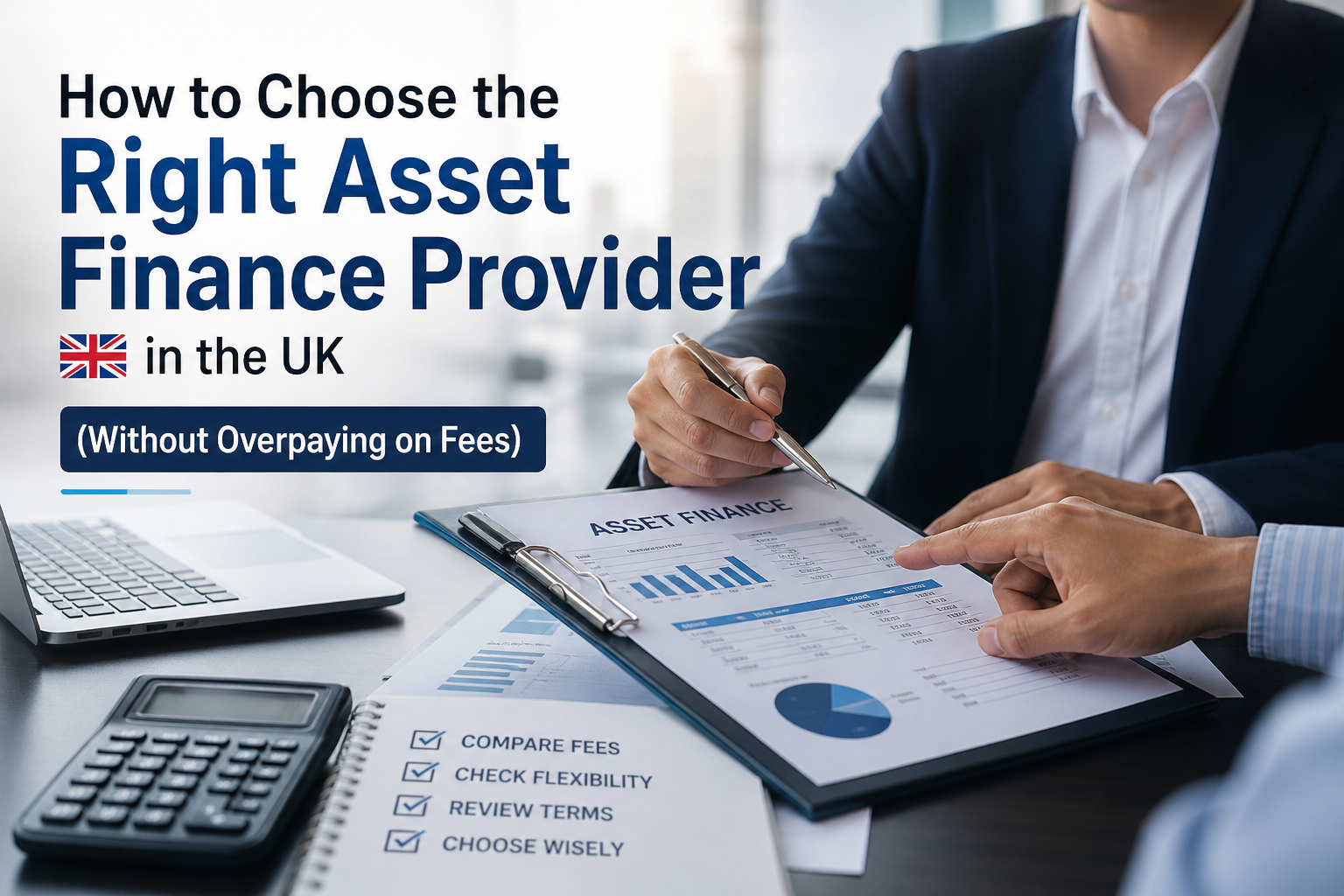
What is Asset Finance and How Does It Work in the UK?
In this guide, we’ll explain what asset finance is, how it works in the UK, and why it is a popular choice for businesses looking for affordable financing options. Whether you run a construction company, logistics firm, or retail business, understanding asset finance can help you make smarter financial decisions and scale your operations efficiently.
Asset finance uses a company’s assets as collateral to fund a purchase or get a loan. This may include short-term investments, inventory, and accounts receivable from the balance sheet. This allows businesses to fund things such as critical assets, replace aging equipment, or expanding current operations. They are usually used to purchase or lease high-value items.
Asset finance in the UK helps businesses acquire equipment, vehicles, and machinery without paying the full cost upfront. It is a popular funding option for small businesses looking to manage cash flow while investing in growth.
Hard Assets
- High valued items to continue business operations, provide strong security for lenders. Commonly include things such as machinery, equipment, vehicles, and building premises.
Soft Assets
- Items that have little/no saleable value at the end of term. Includes things like computer hardware/software, office furniture, CCTV, and tills.
How Asset Finance Works for Businesses
Asset finance works by allowing businesses to acquire assets through a finance provider. The lender either purchases the asset on behalf of the business or provides funding to buy it.
Businesses then repay the amount in fixed monthly installments over an agreed period, typically ranging from 1 to 5 years. Once the agreement ends, the business may own the asset or have the option to upgrade or return it, depending on the type of asset finance used.
What are the Types of Asset Finance?
Finance Lease:-
The finance provider has the responsibility of purchasing the asset and leasing it to another business. Through the lease period, the borrower makes monthly repayments.
Including both the initial asset cost as well as the added interest. The borrower is also responsible for insuring and maintaining the asset.
At the end of the lease term, the borrower has 3 options:
- Continuation – option to continue renting the asset, so sustaining usage for an extended period.
- Return – If it aligns with their business needs, the borrower has the option to return the asset to the finance provider, freeing up cashflow.
- Sale – the borrower can start the sale of the asset on behalf of the finance provider, which can potentially generate value and freeing up resources for their business.
- An Operating lease is a type of asset finance which allows a business to secure equipment for a specified timeframe. However, they receive added flexibility to potentially upgrade to a more advanced model within the rental period.
- Like an equipment lease, but more short-medium term. An operating lease is different from a finance lease. The finance provider assumes responsibility of maintaining the asset throughout the duration of the finance agreement.
Contract Hire:-
- Often used for leasing vehicles for commercial fleets. This is beneficial because no large upfront payment is charged when compared to buying them.
- It is an agreement for a vehicle to be leased for a set period at a fixed cost, where the vehicle remains property of the lender, so will likely impose mileage limits.
- This is a great option for businesses as sourcing, maintenance and service charges are generally covered by the lender, or a fixed maintenance fee is paid monthly.
- This is a great financing option for a business if they wish to own the asset outright at the end. Upon completion of the repayments, the asset is then owned by the lessee, providing a tangible return on investment.
- The ownership remains with the lender right up until the point where the asset is fully paid off by the lessee. While the lessee is paying for the asset, they are also responsible for any maintenance costs that occur through the term.
Business Contract Purchase:-
This is similar to hire purchase; however, the lessee only pays monthly interest payments, with the large payment at the end. This is popular with businesses looking for lower regular costs to make expenses more manageable.
While this is beneficial for the most part, this type of asset finance is usually more expensive in the long run which needs to be considered.
What are the Benefits of Asset Finance?
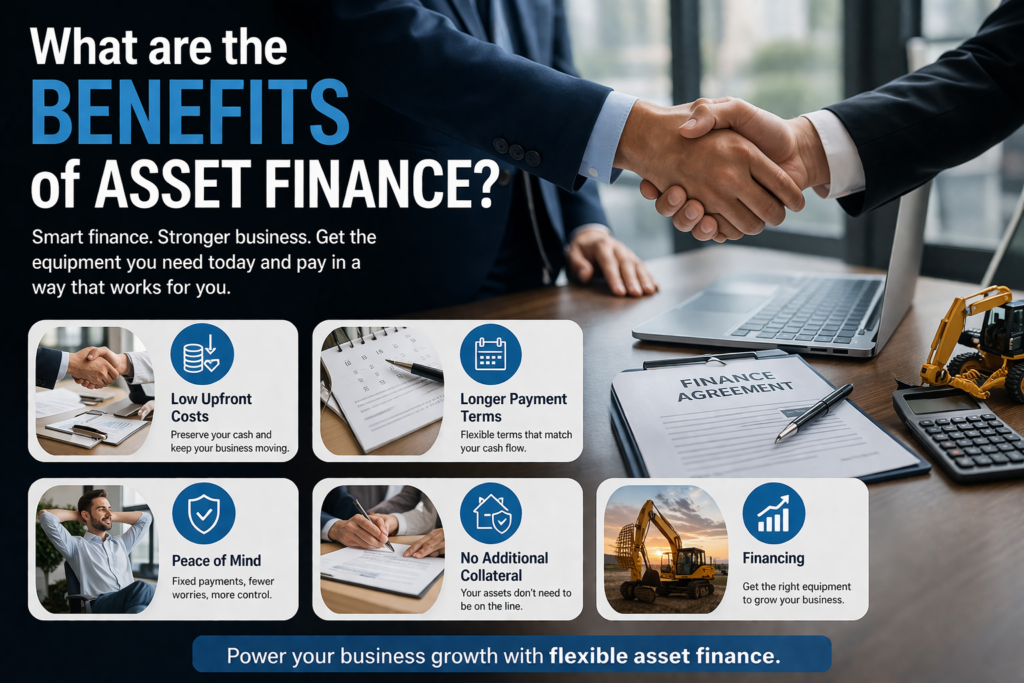
Low Upfront Costs
- A benefit to using asset finance is the minimal upfront costs required for major purchases. This results in businesses being able to acquire and benefit from equipment quickly without preparing for any large sum payments straight away.
Longer Payment Terms
- Due to the long-term nature of asset finance, the cost is generally spread over a long period of time, freeing up capital and supporting a business’s cash flow.
Peace of Mind
- It is common for the lender to be in control of the maintenance and repair of the asset, or even replacing it during the duration of the loan. This rules out any uncertainty or unwanted fees that may emerge.
No Additional Collateral
- Due to the asset being purchased being the security for the lender, there is no need to place additional items at risk. This is beneficial for companies who do not own many assets.
Financing
- Asset finance is generally cheaper than many other forms of business financing
Asset Finance Offers Several other Advantages for Small Businesses and Startups:–
- ✔ Preserve cash flow by spreading costs over time
- ✔ Access essential equipment without large upfront investment
- ✔ Flexible repayment options tailored to business needs
- ✔ Potential tax benefits depending on the finance structure
- ✔ Helps businesses scale operations faster
For UK businesses, asset finance is a practical way to grow without financial strain.
Asset Finance vs Business Loan UK
When comparing asset finance to traditional business loans, there are key differences:
- Asset finance is secured against the asset, while loans may require additional collateral
- Asset finance offers structured repayments linked to the asset
- Loans provide a lump sum, while asset finance is asset-specific
For many UK businesses, asset finance is a more flexible and lower-risk option compared to standard loans.
Who Should Use Asset Finance?
Asset finance is ideal for:
- Small businesses and startups in the UK
- Companies needing equipment or vehicles
- Businesses looking to improve cash flow
- Industries like construction, logistics, healthcare, and retail
If your business needs to invest in assets without large upfront costs, asset finance can be the perfect solution.
What are the Risks to Using Asset Finance?
Ownership
- Due to the lender owning the asset until it has been paid for in full by the borrowing business, there might be restrictions and limits on the use of the asset. For example, annual mileage; any deviations may result in fines/penalties.
Damage
- In addition, if any damage occurs to the asset while it is still owned by the lender, the business may be liable beyond what is agreed beforehand.
Longer Term
- It is common for the term of an asset finance agreement to last over a year, and sometimes even longer – this is a long-term commitment for a business.
Defaulting
- The failure to keep up with repayments or going against the terms of agreement can result in the lender repossessing the asset. This could also have negative repercussions on a business’s credit score.
Eligibility
- To be eligible for asset finance, your business must have a good record of meeting its financial commitments. This is applicable to all business structures, i.e. sole traders, partnerships, limited companies, and even new start-ups.
There are a wide range of options of asset finance for businesses to choose from, supplying many different needs.’
Real Example of Asset Finance in the UK
For example, a UK construction company can finance machinery worth £50,000 with a small deposit and affordable monthly payments. This allows the business to use the equipment immediately while maintaining cash flow for other operational expenses.
Conclusion
Asset finance in the UK is a smart and flexible funding option for businesses looking to grow without heavy upfront investment. By spreading costs and improving cash flow, it enables companies to invest in essential assets and scale efficiently.
Also Read:- Maximise Cash Flow with Asset Finance: Strategies for Small to Medium Businesses
FAQs
Q. Can a business use asset finance if it already has existing loans?
Ans:- Yes, a business can still use asset finance even if it has other loans. Lenders usually review overall cash flow and repayment ability rather than rejecting applications simply because other borrowing exists. In many cases, asset finance is easier to obtain because the financed equipment itself provides security.
Q. Does asset finance affect a company’s day-to-day cash flow?
Ans:- Asset finance is often used specifically to protect cash flow. Instead of paying a large upfront cost for equipment or vehicles, businesses spread the cost over manageable monthly payments. This allows companies to keep more working capital available for operations such as payroll, inventory, or marketing.
Q. Can small businesses finance second-hand equipment through asset finance?
Ans:- Yes, many finance providers allow businesses to finance used or refurbished equipment if the asset still holds sufficient value. This can be useful for small businesses that want to reduce costs while still accessing reliable machinery or vehicles.
Q. How quickly can asset finance be approved for a business purchase?
Ans:- Approval times can vary depending on the lender and the size of the agreement. For smaller equipment purchases, approvals may happen within a few days once financial details and asset information are submitted. Larger or more complex deals may require additional checks.
Q. What should businesses consider before choosing an asset finance agreement?
Ans:- Businesses should review the total cost of finance, contract length, ownership terms, and whether the asset will remain useful throughout the agreement period. It is also important to ensure the monthly repayments align with the company’s expected revenue and cash flow.
Contact Us – The Best Finance Group
If you have any questions or are interested in using asset finance (or any other form of business finance), our dedicated and knowledgeable team are here for you. We will help you select the most suitable type of asset finance, with the lowest interest rates, from our vast panel of Asset Finance Lenders.
Discover the Latest Trends
Stay informed with our latest articles and resources.