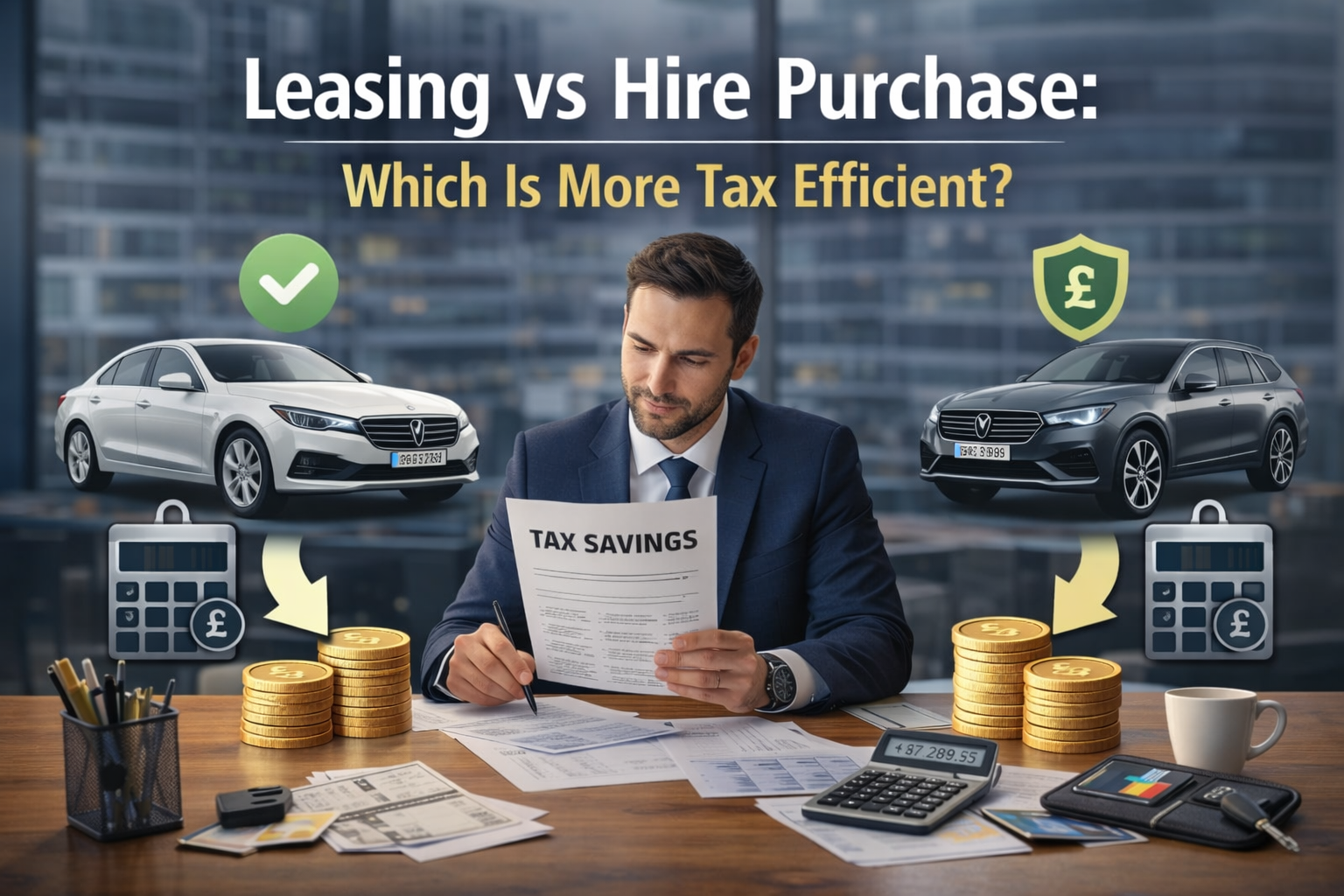
Leasing vs Hire Purchase: Which Is More Tax Efficient?
If you’ve ever sat across from an accountant while they’ve used words like “depreciation,” “capital allowances,” and “offsetting,” you’ve probably felt your eyes glaze over. We get it. You just want a new van, a fleet of laptops, or a high-end piece of machinery to get the job done.
But in the world of business growth, leasing vs hire purchase isn’t just a choice of how you pay—it’s a massive tactical decision for your tax return. The truth is, there isn’t a “magic” winner that fits every UK business.
The “more tax-efficient” option depends entirely on whether you want a big tax break right now or a steady stream of deductions over the next few years. Let’s break down the jargon and look at how these two heavyweights stack up in 2026.
The Basics: Ownership vs Usage
Before we talk about the taxman, we have to talk about who actually owns the “shiny new thing.”
- Hire Purchase (HP): This is essentially “buying on instalments.” You pay a deposit, make monthly payments, and at the end of the term, you pay a small “option to purchase” fee. You own it. It sits on your balance sheet as an asset.
- Leasing: It is more like a long-term rental. You use the equipment for a set period (usually 2–5 years) and then either hand it back, upgrade it, or extend the lease. You never technically own it.
Hire Purchase: The “Front-Loaded” Tax Win
If your business has had a highly profitable year and you’re staring down a scary Corporation Tax bill, Hire Purchase is often the hero of the story.
The Capital Allowance Edge
Because you are technically “buying” the asset, you can usually claim capital allowances. In the UK, the Annual Investment Allowance (AIA) allows many businesses to deduct 100% of the cost of qualifying plant and machinery from their taxable profits in the very first year.
Example: You buy a £50,000 CNC machine on Hire Purchase. Under AIA, you might be able to knock that entire £50,000 off your taxable profit this year. If you’re paying 25% Corporation Tax, that’s a £12,500 saving immediately.
Interest Deductions
- On top of the equipment cost, the interest you pay on your monthly HP instalments is also a tax-deductible business expense. It’s a double-whammy of tax efficiency if you want to keep your cash in the business.
Leasing: The “Slow and Steady” Tax Strategy
Leasing doesn’t give you that massive “Day One” tax deduction, but it is incredibly clean and consistent.
100% Expense Deduction
- When you lease, you don’t worry about depreciation or capital allowances. Instead, you treat the entire monthly payment as a business expense. You simply deduct the rental cost from your revenue before you calculate your profit.
Why Some Prefer This
Leasing is often more tax-efficient for businesses that don’t want to deal with the complexity of asset tracking. It’s also great for “high-turnover” tech.
If you’re leasing 50 MacBooks, you don’t want them on your balance sheet for five years because they’ll be obsolete in three. You lease them, deduct 100% of the costs, hand them back, and get the new models.
The VAT Benefit
With Hire Purchase, you usually have to pay the full VAT on the purchase price upfront (though you can often claim it back on your next return).
With a Lease, you pay VAT on each monthly payment. It is a massive help for cash flow if you don’t want to shell out thousands in VAT on day one.
At a Glance: Leasing vs. Hire Purchase
| Feature | Leasing | Hire Purchase (HP) |
| Ownership | You never own the asset (rental). | You own the asset after the final payment. |
| Balance Sheet | Usually off-balance sheet (Operating Lease). | Sits on your balance sheet as an asset. |
| Tax Deduction | 100% of monthly payments are deductible. | Capital Allowances (AIA) + Interest charges. |
| VAT Treatment | Paid monthly on each instalment. | Usually paid in full, upfront. |
| Best For… | Rapidly depreciating tech (Laptops, CCTV). | Long-term assets (Vans, Heavy Machinery). |
| Upgrade Cycle | Easy to swap for new models at term-end. | Harder; you must sell the asset yourself. |
The Comparison: Which Wins?
When weighing up Leasing vs Hire Purchase, ask yourself these three questions:
- Is my cash flow tight? If yes, Leasing wins because of the spread-out VAT and lower monthly commitment.
- Do I need a massive tax deduction right now? If yes, Hire Purchase and the AIA are your best friends.
- Do I want to own this in 10 years? If yes (like a tractor or a heavy-duty lathe), Hire Purchase wins.
Best Asset Finance: Helping You Decide
Navigating the nuances of leasing vs hire purchase shouldn’t be a solo mission. This is where Best Asset Finance comes into play. We specialise in helping UK businesses find the right structure—not just the lowest rate.
Whether you’re looking to kit out a new commercial kitchen or upgrade your delivery fleet, Best Asset Finance looks at your specific tax position and cash flow needs.
We bridge the gap between “I need this equipment” and “How do I make this work for my bottom line?” By working with a wide panel of lenders, we can often find flexible terms that a traditional high-street bank might miss.
Also Read:- Hidden Costs in Finance Lease Services: How UK Businesses Can Avoid Expensive Mistakes
Conclusion: The Final Verdict
In the battle of leasing vs hire purchase, Hire Purchase is generally more tax-efficient for businesses looking for immediate, large-scale relief through Capital Allowances. Leasing, however, is the winner for businesses prioritising cash flow and VAT management.
Before you sign on the dotted line, always have a quick chat with your accountant and then give Best Asset Finance a call to see which rates are moving the needle in 2026.
FAQs
Q: Can I claim AIA on a leased car?
Ans: Usually, no. Cars have specific, stricter rules for capital allowances and leasing. Equipment, vans, and machinery are much more flexible.
Q: Leasing vs Hire Purchase: Which is better for my credit score?
Ans: Both show up as financial commitments. However, HP is a “debt” on your balance sheet, while an operating lease is often viewed as an ongoing “expense.”
Q: What happens if I want to end a hire purchase agreement early?
Ans: You’ll usually have to pay a settlement figure. You’ll then own the asset outright and can sell it, but you may have to “pay back” some tax relief if you sell it too quickly.
Q: Can a new startup get Leasing?
Ans: Yes! Best Asset Finance often works with newer businesses. While rates might be slightly higher than for a 20-year-old firm, leasing is a great way for startups to get high-end gear without a huge cash outlay.
Q: Is VAT different for HP and Leasing?
Ans: Yes. On HP, you pay VAT on the full purchase price upfront. On a Lease, you pay VAT on each monthly instalment.
Discover the Latest Trends
Stay informed with our latest articles and resources.