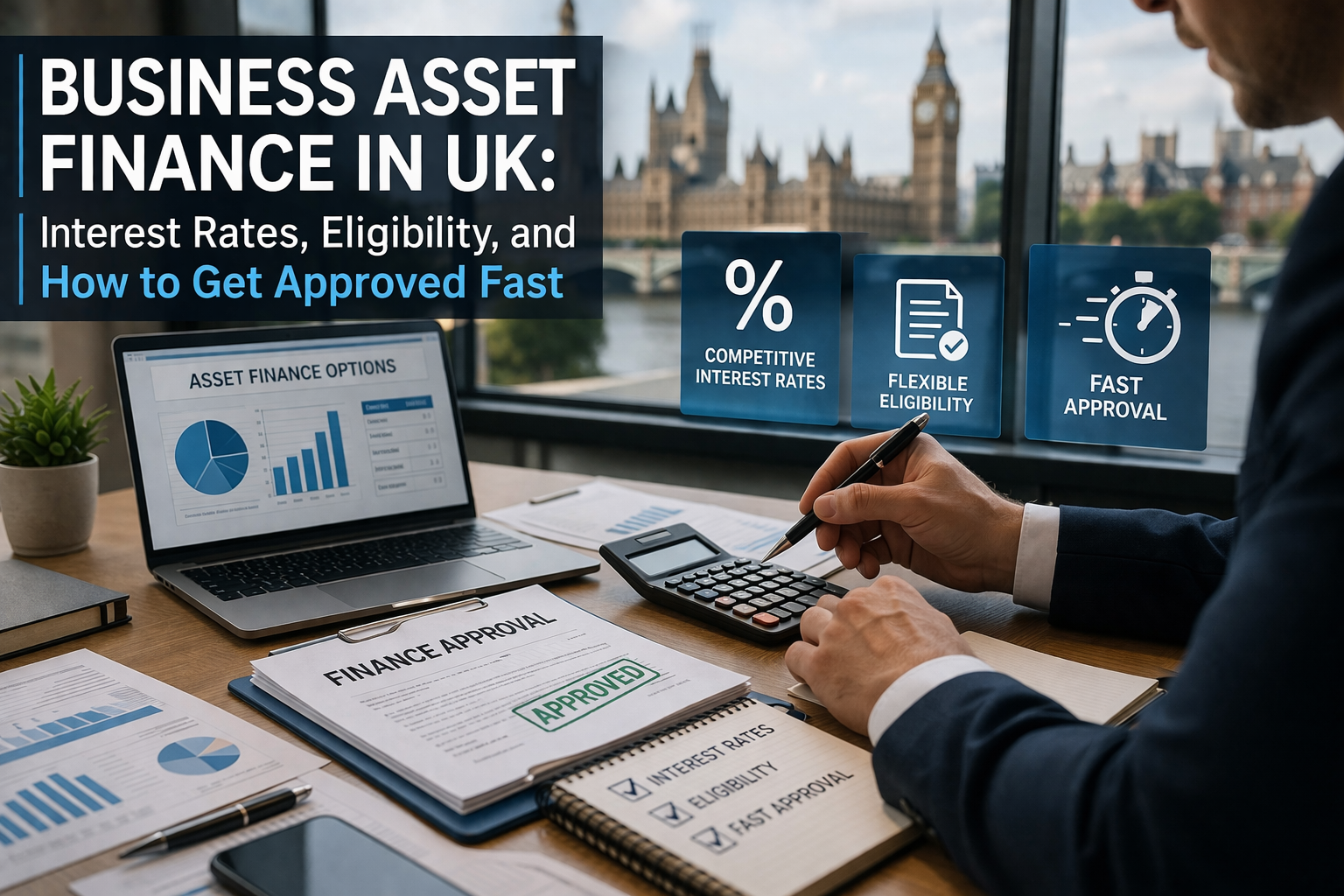
Business Asset Finance in UK: Interest Rates, Eligibility, and How to Get Approved Fast
Whether you’re running a coffee shop in Brighton or a construction firm in Leeds, there’s one hurdle every business owner eventually hits: the “equipment wall.” You know the one.
You need that new shiny van, a high-tech CNC machine, or a fleet of laptops to scale, but dropping £50,000 in cash right now would leave your bank account looking a bit thin. This is exactly where business asset finance steps in.
Think of it as the ultimate “buy now, pay as you grow” strategy for professionals. Instead of draining your working capital, you spread the cost of the equipment over its useful life.
In this guide, we’re going to break down how the UK market works in 2026, from the details of interest rates to the secrets of getting that “Approved” notification in record time.
How Does Business Asset Finance Work in UK?
At its heart, business asset finance is a way of using the asset you’re buying as security for the loan itself. If you stop paying, the lender takes the asset back.
As the lender has that “safety net,” it’s often easier to get than a traditional unsecured bank loan. In the UK, you’ll generally see three main flavours of this finance:
- Hire Purchase (HP): You pay a deposit, make monthly payments, and at the end of the term, you own the asset outright. It’s like a mortgage for a tractor or a printer.
- Finance Leasing: The lender buys the asset and “rents” it to you. You get the use of it, but you never technically own it. This is great for equipment that goes out of date quickly.
- Asset Refinancing: If you already own expensive machinery, you can use it as collateral to unlock cash for other parts of your business.
Can Small Businesses Easily Qualify for Asset Finance?
The short answer is: yes, often more easily than they can for other types of loans. Asset finance for small business in UK has become a cornerstone of the economy because it’s “low risk” for the lender.
Since finance is tied to a physical item (a “hard asset” like a vehicle or a “soft asset” like software), lenders are more willing to work with startups or businesses that haven’t been trading for decades.
As long as you can show that your business is generating enough cash to cover the monthly payments, you’re in a strong position. Even if your credit score isn’t perfect, having a valuable asset as security can often get the deal over the line.
Business Asset Finance Interest Rates: What to Expect
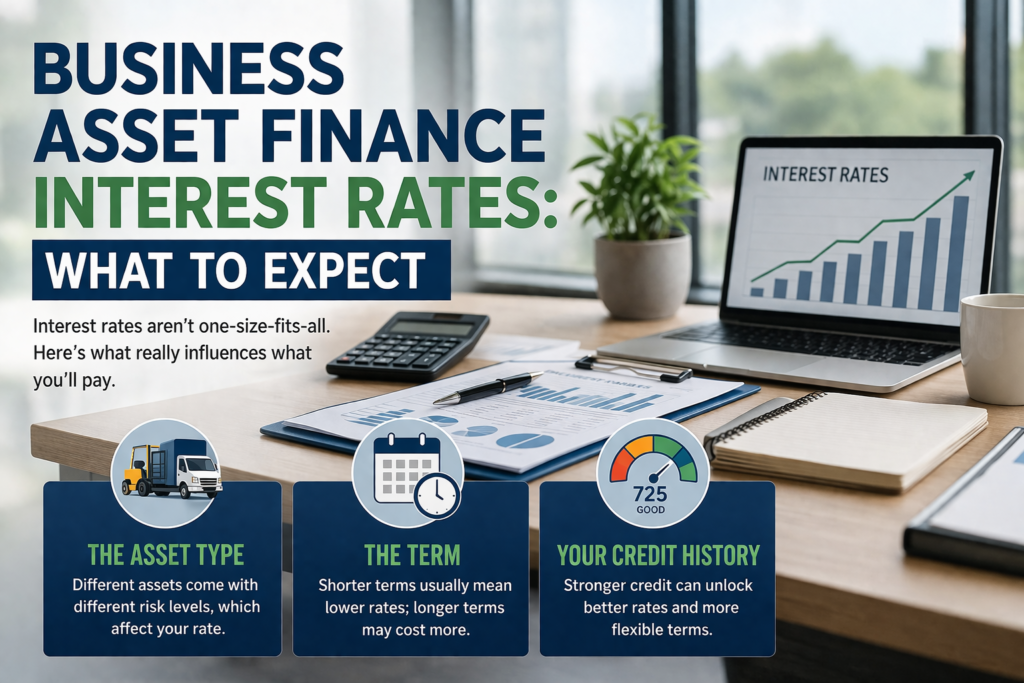
Let’s talk about the elephant in the room: the cost. Business asset finance interest rates aren’t one-size-fits-all. They are a reflection of the risk the lender is taking.
Currently, in the UK market, you might see rates ranging anywhere from 4% to 15% APR (Annual Percentage Rate). Here is what usually swings the needle:
- The Asset Type: New vans or “blue chip” machinery (think Caterpillar or John Deere) usually get lower rates because they hold their value well.
- The Term: A 5-year deal might have a different rate than a 2-year deal.
- Your Credit History: A clean track record always wins the best rates.
One thing to watch out for is the “Flat Rate” vs. “APR.” Always ask for the APR so you can compare apples with apples. A 4% flat rate might actually be closer to 8% APR!
The Asset Finance Approval Process: How to Get Approved Fast
Nobody likes waiting weeks for a “maybe.” The asset finance approval process has become incredibly streamlined thanks to fintech. If you want to know how can I get approved for business asset finance quickly, follow these three rules:
- Be Transparent: If you had a rough quarter last year, explain why. Lenders hate surprises.
- Pick the Right Asset: Trying to finance a very old, niche piece of kit is harder than financing a standard business asset.
- Work with a Specialist: General banks can be slow. Niche asset lenders or brokers can often give you a decision within 24 to 48 hours.
The speed usually depends on the “ticket size.” For a £10,000 printer, you might get an automated “yes” in minutes. For a £500,000 production line, expect a human underwriter to take a day or two to look at the books.
What Documents are Required for Business Asset Finance Approval?
To hit that “fast track” approval, you need your “paperwork” (or digital files) ready to go. Even for asset finance for small businesses in the UK, most lenders will ask for:
- Brief Business Plan/Rationale: Especially for larger amounts, just a paragraph on how this asset will help you make more money.
- Asset Details: A quote or invoice from the supplier showing exactly what you are buying.
- Last 3-6 months of business bank statements: They want to see consistent cash flow.
- Latest set of filed accounts: This shows your year-on-year performance.
- ID for Directors: Usually a passport or driving licence.
How Best Asset Finance Can Help
Navigating the sea of UK lenders can feel like a full-time job. This is where Best Asset Finance comes into play. We act as the bridge between your business goals and the specialised lenders who want to fund them.
Instead of you knocking on twenty different doors, Best Asset Finance uses its deep industry relationships to find the most competitive business asset finance interest rates and terms tailored to your specific sector.
They handle the “heavy lifting” of the application, ensuring your documents are presented in the best possible light to guarantee a smooth asset finance approval process. Essentially, they turn a complex financial transaction into a simple, stress-free conversation.
Also Read:- Asset Finance Brokers in UK: How to Choose the Best Broker and Avoid High Fees
Conclusion
At the end of the day, business asset finance is about leverage. It’s about keeping your cash in the bank for emergencies or marketing, while the equipment pays for itself through the revenue it generates.
Prepare your documents, understand your interest rates, and don’t be afraid to lean on experts like Best Asset Finance to ensure you get the deal your business deserves.
FAQs
Q. Is a deposit always required?
Ans:- While most lenders look for a 10% deposit, some offer “zero-deposit” deals if your business has a very strong credit profile or if you’re providing additional security.
Q. Can I finance used equipment?
Ans:- Absolutely! Most lenders are happy to finance used assets, provided they aren’t past their “sell-by date.” Usually, the asset shouldn’t be more than 10-12 years old by the end of the finance term.
Q. What happens if the equipment breaks down?
Ans:- Since you are the one using the asset, the maintenance and insurance are usually your responsibility. This is why it’s vital to ensure any equipment you finance is in good working order.
Q. Will asset finance affect my ability to get other loans?
Ans:- Generally, no. In fact, showing you can successfully manage an asset finance agreement can actually improve your credit score and make you more “lendable” in the future.
Q. Are the payments tax-deductible?
Ans:- Yes! Depending on whether you choose Hire Purchase or Leasing, you can often claim capital allowances or deduct the monthly lease payments from your taxable profits. Always check with your accountant first!
Discover the Latest Trends
Stay informed with our latest articles and resources.