Finance Lease Agreement UK: Key Terms, Hidden Clauses, and What Businesses Must Check
When your business needs new equipment, whether it’s a fleet of delivery vans, high-end medical tech, or heavy-duty construction machinery, the price tag can be a bit of a gut punch. Most of us don’t have six figures just sitting in a drawer waiting to be spent. This is where a finance lease agreement comes into play.
Finance lease is a popular way for UK businesses to get the kit they need without the massive upfront cost. But before you put pen to paper, you need to know exactly what you’re signing. It’s not just about the monthly payment; it’s about the “fine print” that can make or break your balance sheet.
What is a Finance Lease Agreement in the UK?
At its heart, a finance lease agreement UK is a long-term rental that feels a lot like ownership. You (the lessee) get to use an asset for most of its useful life, while a finance company (the lessor) technically owns it. Think of it like this: the finance company buys the equipment for you, and you pay them back in installments plus interest.
However, unlike a Hire Purchase, you generally don’t automatically own the asset at the end. Instead, you get the benefits of using it, and you usually receive a huge chunk of the proceeds when it’s eventually sold to a third party. It’s a clever way to keep your tax affairs efficient while keeping your cash flow steady.
What Terms Should I Check Before Signing a Lease Agreement?
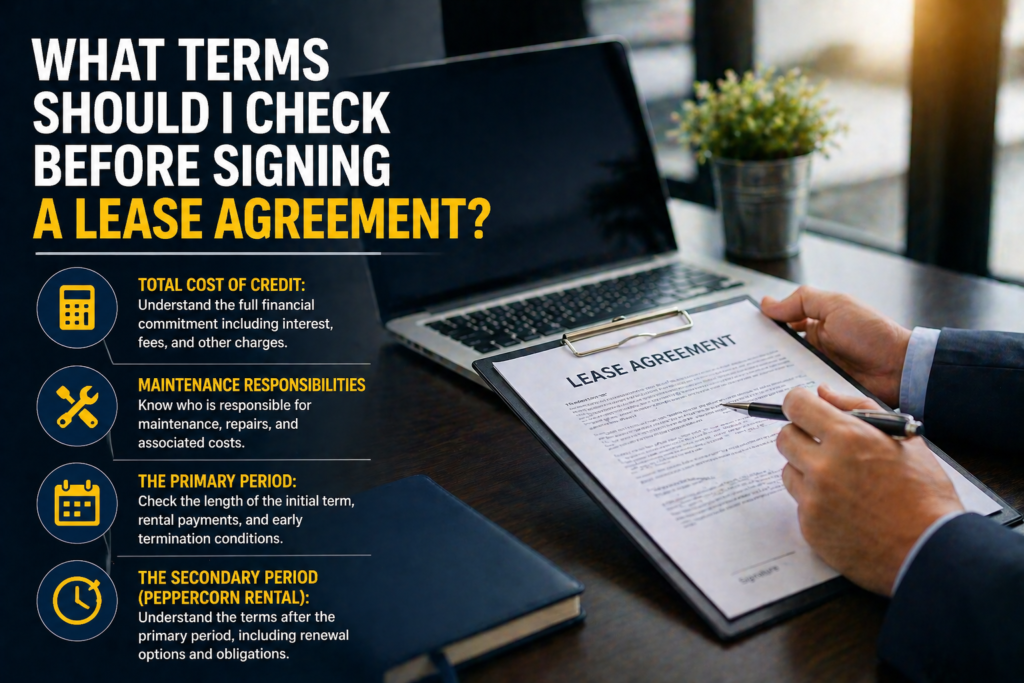
Not all finance lease terms and conditions are created equal. If you glance over the contract, you might miss details that cost you thousands later. Here are the big ones to keep an eye on:
- Total Cost of Credit: Don’t just look at the monthly figure. Look at the total amount you’ll pay over the life of the lease.
- Maintenance Responsibilities: In a finance lease, the “burden of ownership” usually falls on you. That means you are responsible for repairs, insurance, and keeping it in good nick.
- The Primary Period: This is the fixed term of the lease. You are committed to making payments for this entire duration. Make sure this matches how long you actually need the equipment.
- The Secondary Period (Peppercorn Rental): After the primary term ends, many leases allow you to keep using the equipment for a tiny annual fee, often called a “peppercorn rental.” If this isn’t in there, you might be forced to return the gear when you still need it.
Are There Hidden Charges in Finance Lease Agreements?
This is where things can get sticky. While most reputable lenders are transparent, lease agreement hidden charges can still creep in if you aren’t vigilant. Common “surprises” include:
- Documentation Fees: A one-off fee just for setting up the paperwork.
- Annual Service Fees: Some lenders charge a yearly “facility fee” just for managing the account.
- Option to Purchase Fees: If you do want to buy the asset eventually, there’s often an admin fee attached.
- Late Payment Penalties: These can be much higher than standard interest rates, so automated payments are your best friend.
Always ask for a full breakdown of every single fee from day one to the final payment.
How Best Asset Finance Makes a Difference?
Navigating the sea of lenders can be exhausting. This is where Best Asset Finance steps in to do the heavy lifting. We act as a bridge between your business goals and the UK’s leading funders.
Instead of you spending hours deciphering jargon, Best Asset Finance analyzes your specific industry needs. Whether you’re a startup looking for your first van or an established firm upgrading a production line, we help you secure terms that actually fit your cash flow.
We pride ourselves on transparency, helping you spot those pesky hidden clauses before they become a problem. Our goal is to make sure the “finance” part of the lease is the easiest part of your project.
What Happens at the End of a Finance Lease Agreement?
This is a common point of confusion. Because a finance lease is structured so the lessor stays the legal owner, you usually have three options when the clock runs out:
- Return the Asset: You simply give the equipment back to the lessor.
- Enter a Secondary Period: As mentioned, you pay a “peppercorn” rent to keep using the asset.
- Sell the Asset: You act as an agent for the finance company. When the equipment is sold to an independent third party, the finance company keeps a small percentage, and you get the “rebate of rentals” (usually 95%–99% of the sale price).
Also Read:- Asset Refinance UK: How to Release Cash from Existing Assets Without Selling Them
Can I Exit a Finance Lease Agreement Early?
The short answer is yes, but it usually comes with a price. If you want to end the finance lease agreement early, perhaps because you’ve outgrown the equipment or want to upgrade, you will typically have to pay a “settlement figure.”
This figure usually covers the remaining principal balance plus a small exit fee. However, you can often offset this cost by selling the equipment (with the lender’s permission) and using the proceeds to pay off the balance. It’s always worth discussing “early settlement” terms with your broker at the start, so you aren’t trapped if your business pivots.
Final Thoughts
A finance lease agreement is a powerful tool, but it requires a sharp eye. By understanding the lifecycle of the agreement, from the first payment to the final sale and working with experts like Best Asset Finance, you can ensure your business stays equipped for growth without any nasty financial surprises.
FAQs
Q:- How does the UK tax treatment differ for this type of lease?
Ans:- While you don’t own the asset, you can usually claim the interest element of the monthly payments and the depreciation of the asset as business expenses against your taxable profits.
Q:- Is VAT charged on the full price upfront?
Ans:- No, one of the biggest perks is that VAT is charged on each monthly rental payment rather than the total purchase price, which is much kinder to your VAT return and overall cash flow.
Q:- What is the “burden of risk” in a finance lease?
Ans:- Unlike an operating lease, the “risk and rewards” of ownership sit with you. It means if the equipment breaks down or its market value drops, your business absorbs that impact, not the lender.
Q:- Does this agreement show up on my balance sheet?
Ans:- Yes, under current accounting standards, finance leases must be “capitalized,” meaning the asset and the corresponding liability will appear on your business’s balance sheet.
Q:- How do I choose between Finance Lease and Hire Purchase?
Ans:- If you want to own the asset outright at the end, Hire Purchase is usually better. If you prefer lower monthly payments and the flexibility to upgrade or share in the sale proceeds later, a finance lease is often the winner.
Discover the Latest Trends
Stay informed with our latest articles and resources.