Asset Refinance UK: How to Release Cash from Existing Assets Without Selling Them
Running a business often feels like you’re sitting on a gold mine that you can’t actually spend. You look around your warehouse, workshop, or office and see hundreds of thousands of pounds worth of equipment, machinery, or vehicles. On paper, your business is wealthy.
But when it comes to the day-to-day bank balance? Things can get a bit tight, especially when you’re trying to fund a new project, cover a surprise tax bill, or jump on a growth opportunity. It is the classic “asset-rich, cash-poor” trap.
But you don’t have to sell your hard-earned equipment to get your hands on that liquidity. Instead, you can use a strategy called asset refinance. It’s a way to unlock the value tied up in your gear while keeping it exactly where it belongs, working for your business.
What is Asset Refinance, and How Does It Work in the UK?
In simple terms, asset refinance is a type of secured lending. You are essentially using the equity in your existing equipment as collateral for a loan. The process is remarkably straightforward. A finance provider assesses the current market value of your assets.
Based on that valuation, they “buy” the asset from you or take it as security, providing you with a lump sum of cash. You then pay that amount back over an agreed period (usually 1 to 5 years) via monthly installments.
The best part? Unlike a traditional sale, you never lose access to the equipment. You keep using the machinery to generate revenue while the cash you released works elsewhere in the business. It’s essentially a “secured loan” depending on how the contract is structured.
Can I Release Cash from Assets I Already Own?
Yes, that is the entire point! Whether you bought a fleet of vans outright three years ago or you’ve just finished paying off a hire purchase agreement on a CNC machine, those items represent “dead” capital.
By choosing to release cash from business assets, you are effectively turning a static tool into a dynamic source of working capital.
In the UK, it is a popular move for businesses that want to avoid the high interest rates of unsecured borrowing or for those who traditional high-street banks have turned down because they don’t want to put their personal home up as security.
What Assets Qualify for Refinancing in the UK?
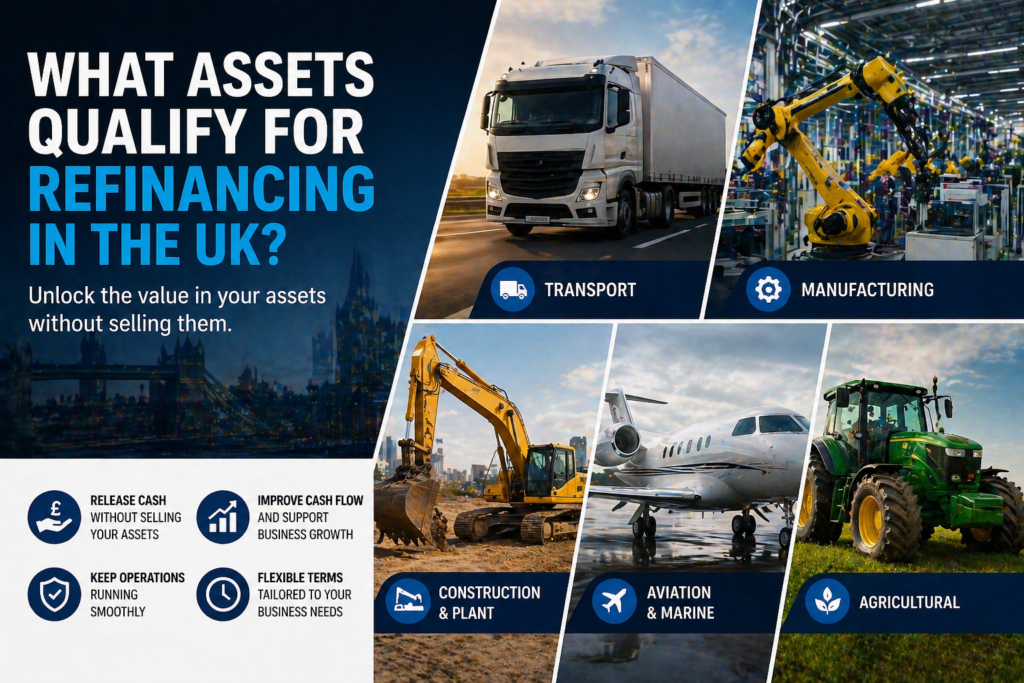
You might be surprised at what a lender considers “bankable.” While every finance firm has its own appetite, the general rule is: if it has a clear resale value and a long lifespan, it probably qualifies. Common assets used for asset refinance UK include:
- Transport: Vans, heavy goods vehicles (HGVs), trailers, and even specialized delivery fleets.
- Manufacturing: CNC machines, printing presses, and industrial ovens.
- Construction & Plant: Excavators, cranes, forklifts, and loaders.
- Aviation & Marine: Private aircraft or commercial vessels.
- Agricultural: Tractors, harvesters, and balers.
Even higher-end office tech or medical equipment can sometimes be refinanced, provided the value is high enough to justify the paperwork.
Is Asset Refinance Better Than a Business Loan?
“Better” is subjective, but asset refinance often wins on several fronts compared to a standard unsecured business loan.
- Approval Rates: Because the loan is secured against a physical object, lenders feel much safer. It often leads to higher approval rates for SMEs or businesses with a less-than-perfect credit score.
- No Personal Guarantees: While some lenders still ask for them, many asset-backed deals rely solely on the value of the machinery, protecting your personal assets.
- Speed: If you already own the asset and have the paperwork ready, the valuation and payout can happen much faster than a complex bank loan application.
- Interest Rates: Secured debt carries lower interest rates than unsecured debt.
How Much Can I Borrow Through Asset Refinance?
The amount you can release depends entirely on the Net Realizable Value (NRV) of the asset. Typically, UK lenders will offer between 70% and 90% of the asset’s current professional valuation.
If you have a fleet of trucks worth £500,000, you could potentially see £400,000 hit your bank account within days. The lender will take into account the age, condition, and “liquidity” of the asset (how easy it would be for them to sell it if you stopped paying).
Why Choose Best Asset Finance for Your Strategy?
When you’re looking to navigate the world of business funding, you need a partner who knows more than just the numbers. Best Asset Finance is an expert at looking at a business’s balance sheet and finding the hidden “pockets” of cash.
While their name highlights their expertise in invoices, their deep connections in the UK lending market make them a powerhouse for arranging comprehensive asset refinance deals.
They help you bridge the gap between where your business is and where it needs to be, ensuring the terms are flexible enough to support your growth rather than stifle it.
Also Read:- Asset Finance Calculator UK: Estimate Monthly Payments and Total Cost Before You Apply
The Bottom Line
Your business’s growth shouldn’t be stalled just because your capital is tied up in a piece of steel or a set of wheels. Asset refinance is a professional way to keep your operations running at full tilt while gaining the financial power you need to expand or simply breathe a little easier.
If you have assets sitting on your balance sheet doing nothing but depreciating, it might be time to put them back to work.
FAQs
Q. Does the asset need to be brand new to be refinanced?
Ans:- Not at all. While newer assets usually command higher valuations, many lenders will refinance machinery that is up to 10 or even 15 years old, provided it is well-maintained and still has a functional market value.
Q. Can I refinance an asset that I am still paying for?
Ans:- Yes. It is often called “re-brokering.” A new lender can pay off your existing finance agreement and give you the remaining “equity” as cash, often restructuring the payments to be more affordable in the process.
Q. Will refinancing my equipment affect my day-to-day operations?
Ans:- No. The only difference you’ll notice is a healthier bank balance and a new monthly direct debit. The equipment stays on your site and is used by your team just like before.
Q. How long does the process take from start to finish?
Ans:- If you have your original purchase invoices and maintenance records ready, an asset refinance deal can often be completed in 5 to 10 working days.
Q. Are there any restrictions on how I use the released cash?
Ans:- Generally, no. Once the cash is released, it is your working capital. Whether you use it to pay off a high-interest debt, buy raw materials in bulk, or hire new staff, the choice is yours.
Discover the Latest Trends
Stay informed with our latest articles and resources.